In this interview, I speak with former ASHR president Susan Jarratt about her new book manuscript on the Second Sophistic, the importance of foregrounding historiographical questions in historical research, and the enduring appeal of Sappho. Jarratt is professor emerita of Comparative Literature at the University of California, Irvine. She earned her Ph.D. at the University of Texas at Austin.
Jordan Loveridge: First of all, thank you so much for agreeing to this interview. Your book Rereading the Sophists: Classical Rhetoric Refigured was among the first that introduced me to the history of rhetoric as a discipline. Can you tell me about how you became interested in the history of rhetoric? What initially drew you to the field, and how would you describe your main research areas?
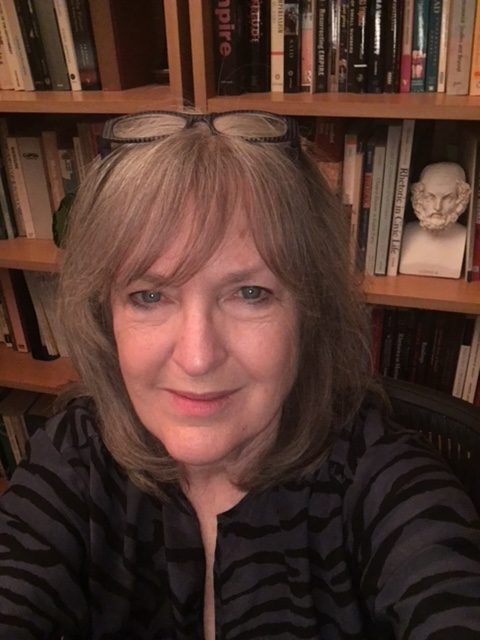 Susan Jarratt: I came into the field through my experiences as a high school teacher of writing. In the 70s I taught high school in San Antonio, Texas, and many of my students were struggling with academic English. During my Master’s program at the University of Texas at San Antonio, I was introduced to the then-new ideas about teaching writing as a process; they completely changed my approach to writing students. At the same time, I took a course in literary theory including works by Plato and Aristotle. I was drawn to ancient Greek culture and ideas about language. When I got into the PhD program at the University of Texas at Austin, these two experiences came together under the heading of “rhetoric.” In that program it was possible to connect composition, the history of rhetoric, and literary theory and criticism through the brilliance and generosity of an amazing faculty. Returning to the Greeks in James Kinneavy’s course in classical rhetoric I had an urge to somehow get behind Plato and Aristotle. Professor Kinneavy aimed me toward the first sophists, and they became the subject of my dissertation and first book. I love the way their very diverse writings raise questions about language and power, the consequences of unquestioned cultural stories, the ethics and techniques of teaching, and the pleasure of artistry and play.